
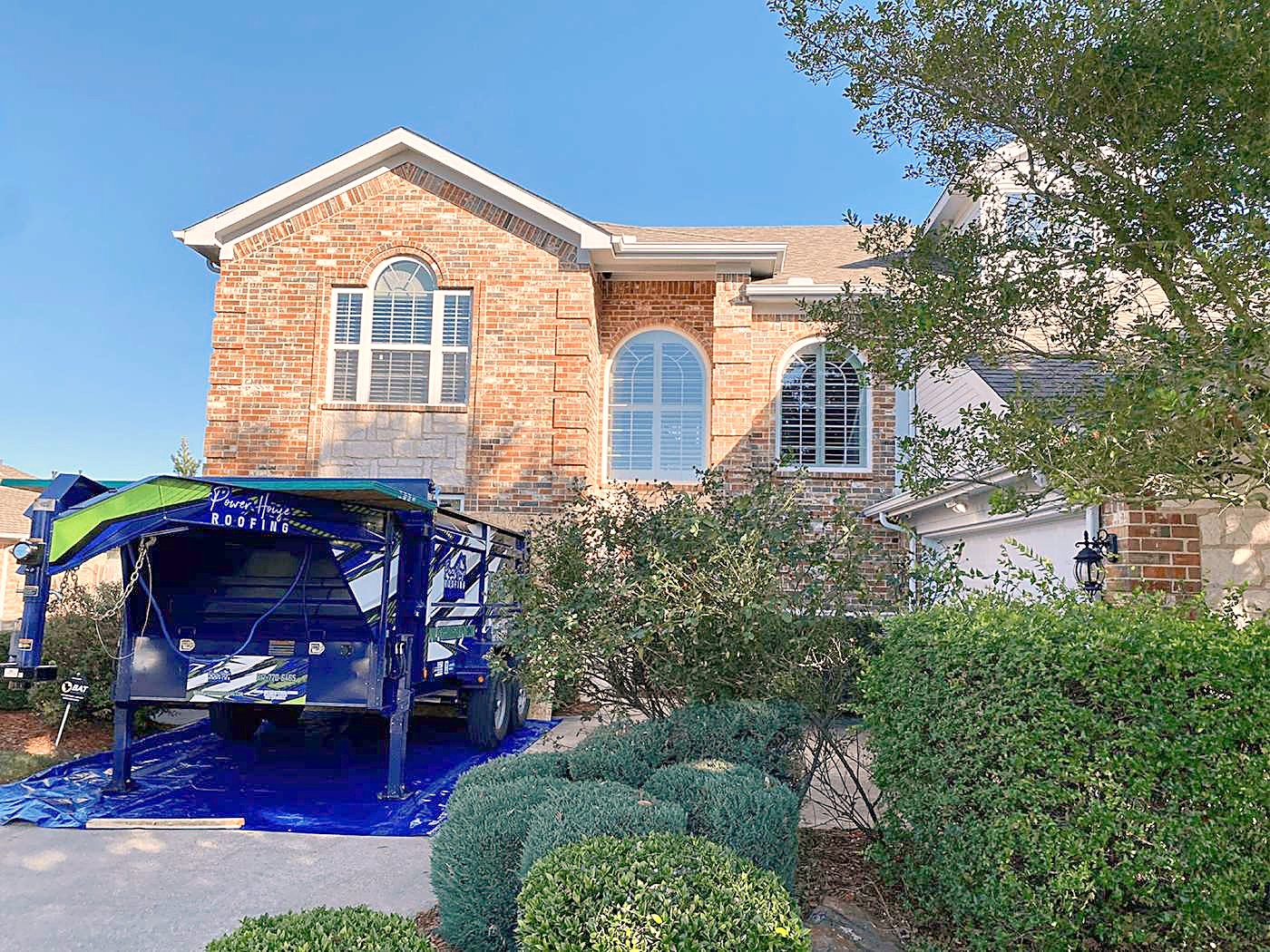
How long does a roof replacement take?
A typical asphalt shingle replacement on a single-family house takes one day on site, from tear-off to cleanup. Large or steep roofs, roofs with more than one layer of shingles, and roofs with rotten decking usually take two to three days. The longer wait tends to come before work starts, while the weather clears and, on an insurance job, while the claim runs its course.
An ordinary house is usually torn off and roofed in a single day
On a typical single-story or two-story house with an asphalt roof, the whole replacement fits into one working day. Shingles and underlayment are usually delivered the day before or first thing that morning. The crew protects the beds and landscaping, strips the old roof down to the decking, and checks the decking for boards that have gone soft or rotten.
Then the new roof goes on in layers. Drip edge along the eaves and rakes, underlayment across the deck, self-sealing ice and water barrier in the valleys and around penetrations, starter shingles, the field shingles, flashing at walls and chimneys, vents, and finally the hip and ridge caps. Ventilation along the ridge and under the eaves is part of the same day's work, because a roof that cannot breathe cooks its shingles from underneath.
The last hour goes to cleanup: hauling off the old shingles and running a magnet over the driveway, lawn and beds for nails. On an ordinary roof, a crew that starts at first light is often packing up by late afternoon.
Steep pitches, extra layers and soft decking add days
A steep roof is slower on every square. Crews work from harnesses and roof jacks, materials have to be staged by hand, and each move takes longer. A big roof with a lot of hips, valleys and dormers adds cutting and flashing work that a simple gable roof does not have. Either can push a job into a second or third day.
More than one layer of shingles means a heavier, slower tear-off and more to haul away. Building codes do not allow a new roof over two existing layers, so an older house that was re-roofed over the top once already has to come down to the deck.
Rotten decking is the delay nobody sees coming, because it only shows once the old roof is off. Damaged boards have to be cut out and replaced before anything goes over them. On an insurance job, damage found during construction goes back to the insurer as a change order. If Power House is doing your roof, your project manager submits the change order to the insurance company and deals directly with your adjuster to get it approved.
Older homes that once had wood shakes sometimes have spaced board decking, with gaps between the boards that shingles cannot be nailed across. That deck has to be sheathed over with plywood or OSB first, which adds material and time.
Weather moves the start date more than it stretches the job
A tear-off should not start with rain in the forecast, since an open deck lets water straight into the attic. Strong wind is a problem for crews working on a roof edge and for underlayment that has not been covered yet. North Texas spring brings both, often in the same week, so a job scheduled for a Tuesday can move to Thursday without anything going wrong.
Summer heat changes the working day. Crews start early to finish before the hottest afternoon hours, and hot shingles scuff more easily underfoot. Cold has the opposite effect: the self-sealing strips on asphalt shingles need warmth from the sun to bond, so a roof put on in a cold snap may take longer to seal down fully.
After a large hailstorm, the whole trade gets busy at once, and start dates across the area move back. If your roof is leaking while you wait, Power House offers emergency tarping 24/7 to keep water out until the replacement can start.
On an insurance roof, the claim comes before the calendar
When insurance is paying, the roof cannot start until the claim is approved and a scope and price are agreed. The steps run in order: an inspection of the roof, filing the claim, the adjuster's visit, and the insurer's decision. Under Texas law, once the insurer has everything it asked for, it has 15 business days to accept or reject the claim in writing, or it can tell you it needs more time and take up to 45 more days.
If you have a mortgage, the claim check usually carries your lender's name, and the lender's own process for endorsing or releasing the money can add time before materials are ordered. After the roof is finished, a replacement cost policy releases the held-back depreciation once the insurer receives the final invoice.
Power House offers free roof inspections, and on an insurance job we work with your insurance company to agree on a scope and price before the work begins. Call (817) 720-6465 to get the first step on the calendar.
Related questions
Do I need to be home during a roof replacement?
Not for the whole day, though someone should be reachable in case rotten decking turns up or a question comes up. Move cars out of the garage and driveway before work starts, and take pictures and fragile items off the walls, since hammering carries through the framing.
Can a roof be replaced in the rain?
A tear-off should not start with rain in the forecast, because an open deck lets water into the house. If weather arrives partway through a job, the exposed sections get covered with underlayment or tarps until it passes.
How long does the insurance part take?
Once your insurer has everything it asked for, Texas law gives it 15 business days to accept or reject the claim in writing, or up to 45 more days if it notifies you that it needs more time. The adjuster's visit and paperwork come before that clock starts, and a mortgage company on the check adds its own steps after.
